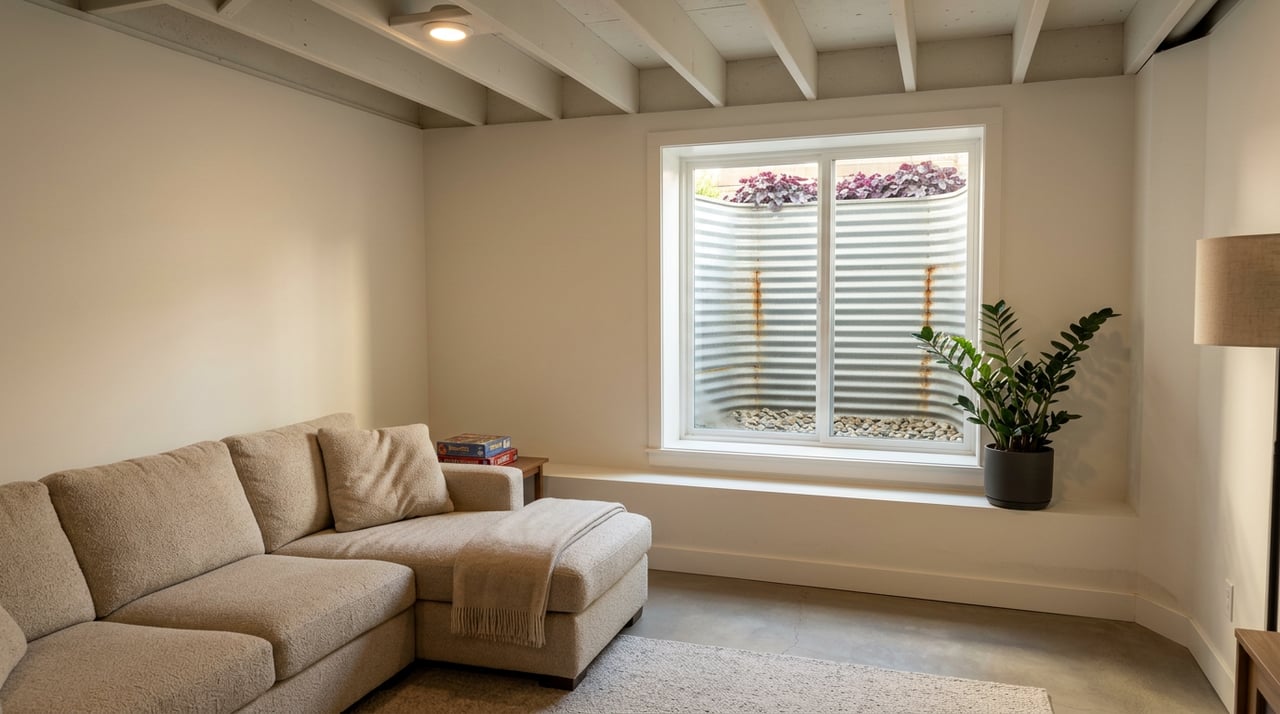
Radon Testing and Negotiation in Black Hawk County Sales
August 20, 2026
August 20, 2026
A buyer in Cedar Falls made an offer in June, waived nothing, and scheduled the inspection for the following week. The radon canister came back at 6.8 pCi/L, well above the EPA's action level of 4.0. The seller had never tested. Now both sides were negotiating a repair they hadn't budgeted for, on a timeline neither of them controlled, because nobody had looked at the number before the contract was signed.
That sequence is the actual story of radon in a Black Hawk County transaction. Not whether the gas is present. It almost certainly is somewhere in the house. The story is about who tests first, because Iowa law hands the negotiating advantage to whoever controls the timing.
Iowa Code 558A requires every seller to give buyers a written disclosure statement before an offer is accepted, and the state's radon rule sits inside that same framework. Sellers must disclose any known radon test results, the date of the report, and what it found. They also have to confirm they've handed the buyer a copy of the Iowa Radon Home-Buyers and Sellers Fact Sheet, and the buyer has to sign off that they received it.
What the law does not do is require anyone to test in the first place. A seller who has never run a radon test has nothing to disclose. That single gap is the mechanism behind almost every radon negotiation in this county. If you test before you list, you know your number and you can price around it, offer a credit, or install mitigation on your own schedule. If you wait for the buyer's inspector to find it, you're negotiating from behind, on their clock, often with an accepted offer already on the table.
Buyers face the mirror image of the same choice. A radon test isn't automatic. It has to be added to the inspection contingency, usually run over 48 hours with a continuous monitor. Skip it, and you close without ever knowing what the previous owner already might have known and didn't have to test to find out.
The state-level statistic gets repeated everywhere: Iowa has the largest share of homes above the EPA's 4.0 pCi/L action level of any state in the country, according to the Iowa Radon Survey cited by Iowa Health and Human Services. That's a background fact. The county-level number is the one that should change how a local buyer or seller behaves.
The Black Hawk County Board of Health reviewed radon test results collected in the county between 2000 and 2024 and found that nearly 40 percent met or exceeded the EPA's action level. Some individual readings in the county came back above 100 pCi/L, more than 25 times the threshold at which the EPA recommends fixing the problem. That's not a statewide abstraction. That's a real spread of outcomes across neighborhoods in Waterloo, Cedar Falls, and the surrounding townships, and it means a buyer here can't assume a newer-looking home is a safe bet. Foundation type and soil conditions under a single lot matter more than the age or price point of the house sitting on it.
Disa Cornish, chair of the county's Board of Health, put the county's position plainly in a statement covered by KWWL earlier this year:
"Radon exposure poses a serious health risk to Iowans, but with testing and mitigation, it's a risk we can significantly reduce."
The county backs that statement with action, not just messaging. Black Hawk County Public Health, based at 1407 Independence Avenue in Waterloo, sells short-term test kits directly to residents at a modest cost and has run awareness events at locations including the Cedar Falls Public Library and Habitat Re-Store Waterloo during past Radon Awareness Months. A seller here doesn't need to hire anyone to get a first read. The county has already built the on-ramp.
Iowa's building code now requires radon-resistant construction techniques in new single- and two-family homes statewide, a change that took effect July 1, 2026 under updates tied to legislation passed earlier this year. New builds have to include a passive mitigation method, the kind of piping and sealing that can later be activated with a fan if a post-construction test comes back high.
Here's the detail that matters specifically for Black Hawk County: before this rule took effect, only 11 known jurisdictions in Iowa already required this under the earlier 2017 building code. Those were Bremer, Johnson, Linn, and Polk counties, plus a handful of cities including Altoona, Bondurant, Carroll, Iowa City, North Liberty, Norwalk, and Pella. Black Hawk County was not on that list. Buyers looking at new construction in Waterloo or Cedar Falls before this summer were buying homes with no built-in radon protection unless the builder chose to add it voluntarily. Buyers looking at new construction here now get something that was previously reserved for a smaller set of Iowa communities.
A Mason City official quoted in coverage of the legislation framed the cost logic simply: building the passive system in during construction runs roughly $300 to $500, compared with as much as $3,000 to retrofit a finished home later. For a Black Hawk County buyer comparing a new build against an older resale house, that gap is now a real part of the math, not a hypothetical.
If a test comes back elevated, the fix is a mitigation system, typically a sub-slab depressurization setup that draws soil gas out from under the foundation and vents it above the roofline through a fan-driven pipe. Across multiple published Iowa contractor pricing guides, installed costs generally land between $800 and $2,500, with most standard installs on a single basement foundation falling closer to $1,200 to $1,800. Crawl spaces and split foundations tend to push toward the higher end because they need sealing work the simpler slab jobs don't.
That range is worth knowing before you're staring at a repair addendum with a closing date attached to it. Here's roughly how the decision tree plays out depending on when the test happens:
| Scenario | Who controls timing | Typical outcome |
|---|---|---|
| Seller tests before listing, result is clean | Seller | No negotiation needed, result becomes a selling point |
| Seller tests before listing, result is elevated | Seller | Seller schedules mitigation on their own timeline, prices it into the listing |
| Buyer's inspector tests, result is clean | Buyer | Deal proceeds as written, no cost to either side |
| Buyer's inspector tests, result is elevated | Buyer | Mid-contract negotiation over repair credit or price reduction, on the buyer's inspection deadline |
Local companies including Midwest Radon Systems, which lists service across Waterloo, Cedar Falls, Independence, and Sumner, and National Radon Defense's regional dealer network serving the Waterloo area, both work directly with sellers and buyers on exactly this kind of mid-transaction timeline, including post-installation verification testing that satisfies most lenders and inspectors. A seller who tests early and lines up a contractor before listing turns a potential deal-breaker into a line item. A buyer who waits until inspection week is negotiating against a clock someone else set.
If you're selling, the county's own kit sales make a pre-listing test close to free. Run it before you sign with an agent, and you walk into pricing conversations with information instead of guesswork. If the number comes back high, you have time to get quotes and decide whether to mitigate or price the home to account for it, rather than reacting to a buyer's inspector on a deadline.
If you're buying, add the radon test to your inspection contingency without treating it as optional paperwork. Given that close to 40 percent of the county's own test history has come back elevated, skipping the test isn't a savings, it's a bet against a coin that comes up tails almost four times in ten.
Does Iowa require a radon test before selling a home? No. Iowa law requires sellers to disclose any test results they already have, along with providing the state's radon fact sheet, but there's no requirement to test in the first place.
What radon level requires mitigation in Iowa? The EPA's action level is 4.0 picocuries per liter. Readings at or above that threshold are when mitigation is recommended, though the EPA notes health risk exists at lower levels too.
Does the new construction law affect homes already built in Black Hawk County? No. The passive mitigation requirement that took effect July 1, 2026 applies to new single- and two-family construction going forward. Existing homes aren't required to add anything, though owners can still test and mitigate voluntarily at any time.
Who usually pays for radon mitigation in a sale? It's negotiated case by case, typically as part of the repair request after inspection. Some sellers cover the full cost, others split it with a credit, and terms depend on what's written into the purchase agreement.
Radon isn't a reason to walk away from a house in Waterloo or Cedar Falls. It's a reason to control when you find out about it instead of finding out on someone else's schedule. If you're weighing a sale or a purchase in Black Hawk County and want a straight read on how this plays into your specific timeline, Wapsie Realty can walk you through it before it becomes a surprise on an inspection report. Contact Us.
Stay up to date on the latest real estate trends.

We pride ourselves in providing personalized solutions that bring our clients closer to their dream properties and enhance their long-term wealth.