Selling a Buchanan County Home With a Septic System
August 13, 2026
August 13, 2026
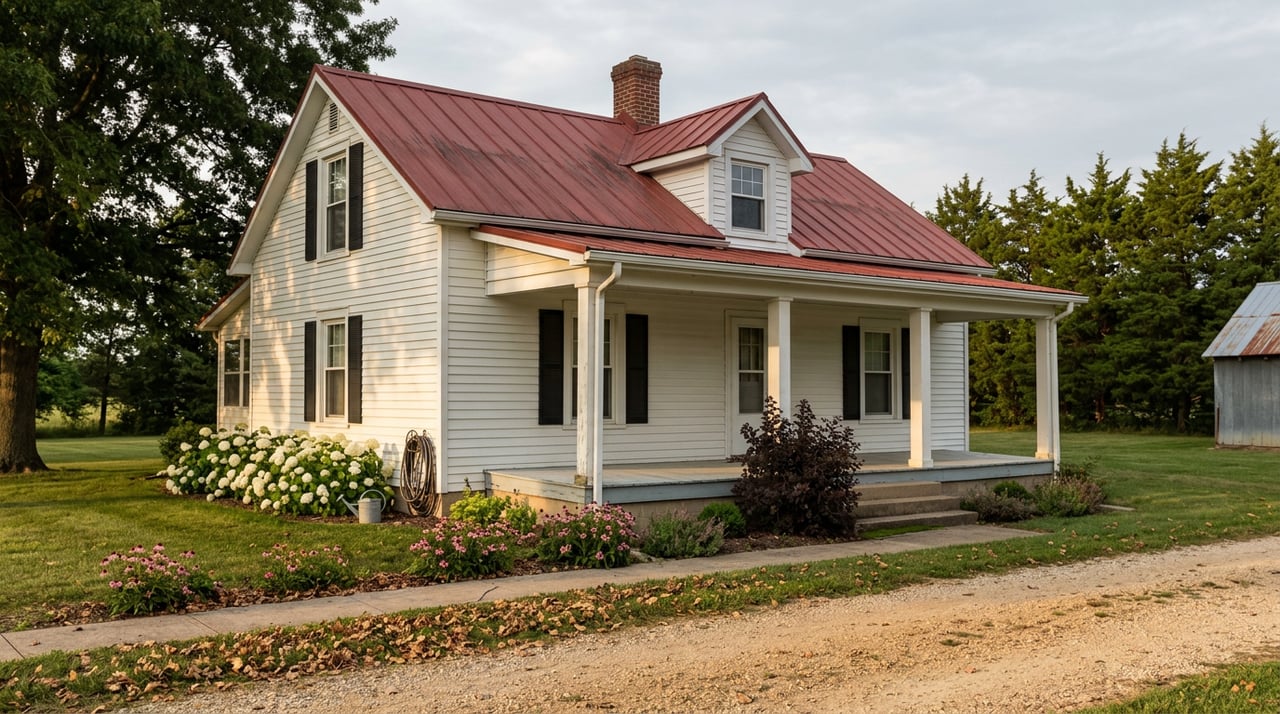
The purchase agreement is signed. The closing date is on the calendar. Then the Time of Transfer inspector opens the tank on a farmhouse outside Winthrop and finds a leach field that failed years ago, no secondary treatment, straight discharge into a drainage tile. Buyer and seller are now staring at a repair bill that could run into the thousands, and both sides assume someone, somewhere, has a rule for who pays.
Nobody does. Not the state, not the county, not the inspector. Buchanan County's own Environmental Health office says as much in plain language: the county does not regulate who covers a private sewage system upgrade, and that question gets settled "during the offer and acceptance process." In a county where a large share of the housing stock outside Independence's core sits on private wells and septic systems, that single gap in the paperwork is where more rural deals stall than almost anything else.
Iowa's Time of Transfer law is not new and not complicated. Passed as SF261 in April 2008 and effective July 1, 2009, it's codified at Iowa Code 455B.172 and requires that any home or building served by a private sewage disposal system be inspected by a DNR-certified inspector before the sale or deed transfer records. The purpose is narrow: catch systems with no secondary treatment following the septic tank, or a secondary treatment system that has failed, since those are the setups that pose a real pollution risk.
In Buchanan County, that inspection is administered out of the Sanitarian's office in the lower level of the courthouse at 210 5th Ave NE in Independence. A new private sewage permit runs $175, a repair permit $100, and either one expires a year after it's issued. None of that is a surprise to anyone who has sold rural property before. The inspection requirement is on record, the Iowa DNR's Time of Transfer page spells it out, and most sellers plan for it the way they'd plan for a home inspection.
What catches people off guard is the second half of the question. Buchanan County's own environmental health FAQ addresses it directly: negotiations over who pays for a system upgrade happen inside the offer and acceptance process, not according to any county or state formula. That means whichever party gets specific language into the purchase agreement first, before an inspection report exists, is negotiating from a position the other side has to react to instead of dictate. A seller who assumes "it'll work itself out" is handing that first move to the buyer's agent.
| Item | Cost or range | Notes |
|---|---|---|
| New sewage system permit | $175 | One-year validity |
| Repair permit | $100 | One-year validity |
| Well test (coliform, E. coli, nitrates) | $50 when grant funds unavailable | Free when Private Well Grant funds are active |
| Arsenic test | $20 per test | Same grant rules apply |
| Well reconstruction assistance | Roughly $2,000 to $2,400 | County pages show slightly different caps; call to confirm current figure |
| Well plugging assistance | Roughly $700 to $800 | Same caveat |
| Cistern plugging assistance | Roughly $400 to $500 | Same caveat |
Those grant figures come from two different Buchanan County program pages that don't fully agree with each other, which is itself worth knowing before you promise a buyer a specific number. The office to call for a current figure is the Sanitarian's line at (319) 334-2873.
Iowa Code 455B.172(11) lists twelve exemptions to the inspection requirement, and Buchanan County's FAQ walks through nine of them directly. Before either side spends money on an inspection, it's worth checking whether the transfer even triggers the law:
An estate sale, a divorce settlement, or a transfer between family members can skip the inspection question altogether. A straightforward third-party sale of an occupied farmhouse almost never does.
Even when the inspection is required and the money question gets sorted early, timing can still trip up a closing. Buchanan County Environmental Health typically runs well water sampling on Wednesdays between 8 a.m. and 4 p.m., with results back in two to three business days. That's a manageable window on its own, but it becomes tight fast if a first test comes back showing nitrates or bacteria and a retest is needed after treatment, all while a lender's closing deadline hasn't moved.
For winter closings, there's a built-in release valve: a binding agreement for a weather delayed inspection lets the sale proceed with a commitment to complete the septic inspection once the ground and weather allow. It has to be arranged with the county Board of Health, not assumed.
Here's the part that changes how much leverage a seller actually has going into that negotiation. In the three months ending May 2026, Buchanan County homes sold for a median price of $192,000, down 4.0 percent from the same period a year earlier. Homes are also taking roughly twice as long to sell, an average of 29 days on market compared with 15 days a year ago, and fewer of them are moving at all, 21 sales in May 2026 versus 26 the year before.
A year ago, with homes moving in half the time, a seller could hold a firmer line on a septic repair bill because a buyer walking away meant a fast re-list to someone else. With days on market nearly doubled and sales volume down, that math has flipped. A buyer today has more room to say they'll walk unless the seller covers the fix, because the seller's next buyer isn't likely to show up in two weeks. Waiting until the inspection report lands to think through this question costs a seller exactly the leverage the current market has already taken away.
Rural transaction activity in the county hasn't slowed the way the residential numbers might suggest. Peoples Company has an online-only farmland auction scheduled for Friday, August 14, 2026, for acreage just north of Independence, one of several rural listings moving through the county right now. Buyers are actively looking at Buchanan County ground, which means sellers of houses with private systems are competing for attention in a market that still rewards being ready before an offer arrives.
The practical move is to order your own Time of Transfer inspection before you list, not after an offer comes in. Knowing the condition of your system before a buyer's inspector does means you're pricing the home with that cost already accounted for, or you've already made the repair and removed the question entirely. Either way, you're negotiating from a position you chose instead of one an inspection report handed you at the worst possible moment.
What if my property is on rural water instead of a private well? Buchanan County Environmental Health doesn't regulate rural water hookups. Signing up runs through the Iowa Regional Utilities Association. The septic side of the Time of Transfer requirement still applies regardless of where the water comes from.
Can a pumping receipt substitute for opening the tank during inspection? Under the state administrative rule, documentation of a pump-out within the prior three years by a licensed commercial pumper, including tank size and condition, can satisfy that part of the inspection. The full standard is laid out in Iowa Administrative Code Chapter 69.
What if I need to close in the middle of winter? That's what the weather-delayed inspection binding agreement is for. It has to be filed with the county Board of Health before closing, not assumed as a fallback.
If you're weighing a sale on an acreage, a farmhouse, or anything else in Buchanan County running on a private well and septic system, it's worth having someone look at the property and the paperwork before a buyer's agent does. Heather Federspiel spent twenty years in banking before she started selling real estate, and Travis Wiley has spent his career elbow deep in farmland, renovation, and the kind of repairs that show up on inspection reports. Between the two of them, Wapsie Realty has seen this negotiation play out more than a few times, and knows what it takes to walk into it prepared instead of surprised. Contact Us before you list.
Stay up to date on the latest real estate trends.






They aren’t selling your loan again, just the right to service your loan.
We pride ourselves in providing personalized solutions that bring our clients closer to their dream properties and enhance their long-term wealth.