How Long Will the Low Tax Bill on a Newer Waterloo Home Last?
October 15, 2026
October 15, 2026
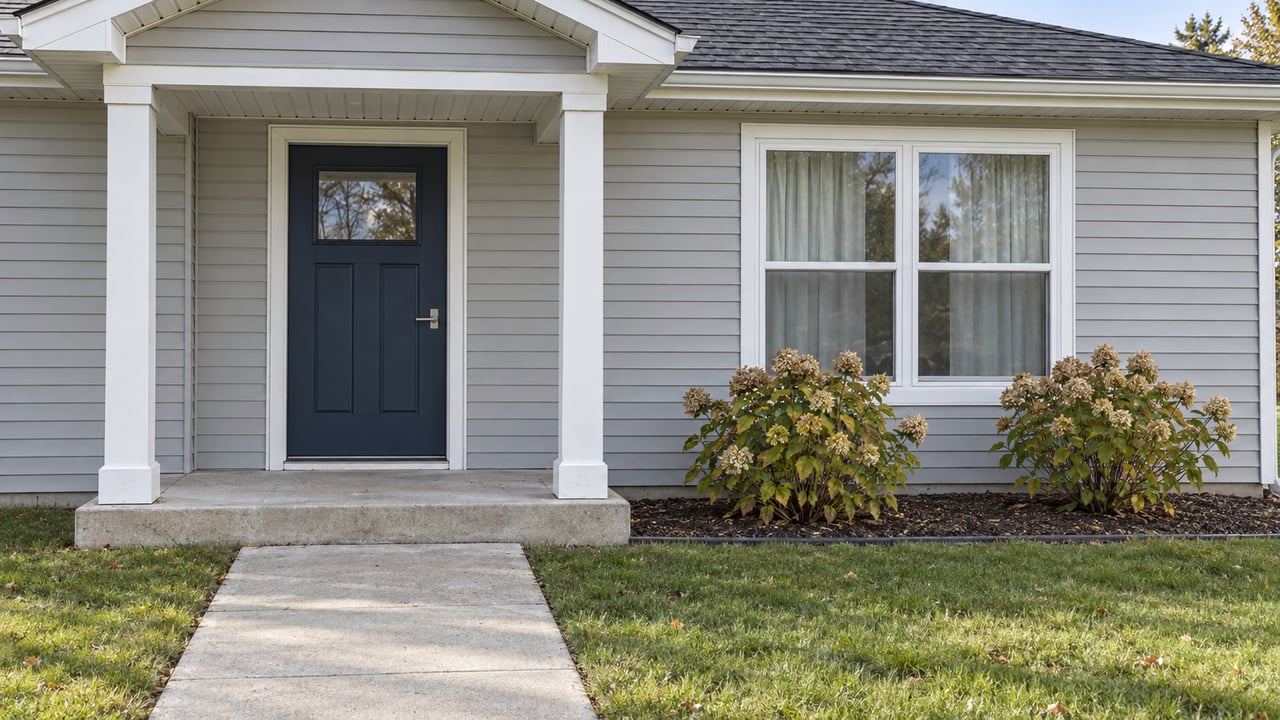
Two Waterloo houses can list at similar prices, look alike, and still carry very different property tax figures. The tax line on a house built in the last few years often looks low next to an older home. Usually the newer house is partway through a tax abatement. Once the abatement ends, that number goes up on a set schedule. When the paperwork was filed also matters, because a 2024 state law changed what "fully abated" covers.
The figure you see on a listing or a seller's disclosure is one year's bill. To compare a newer Waterloo home with an older one, you need to know which year of the abatement you're looking at, which schedule the owner picked, and whether the application was filed before or after July 1, 2024.
Waterloo has two abatement areas. The Consolidated Urban Revitalization Area, or CURA, covers the central parts of the city. There, new construction, rehabilitation, and additions can qualify if the work raises a residential property's assessed value by at least 10%. The City Limits Urban Revitalization Area, or CLURA, covers the rest of the city. In CLURA, the qualifying residential work is new home construction. Between the two, practically any newly built house in Waterloo can qualify. The city's tax abatement page has a map showing which area a given address falls in.
That's why the issue shows up so often in resale listings. According to the city's development updates, Waterloo's construction permit value reached $296.26 million in fiscal year 2026, the second-largest year on record behind fiscal year 2025's $304.13 million. The 216 new housing units permitted in fiscal year 2026 included 34 single-family homes and 28 twin homes, and fiscal year 2025 added another 53 one- and two-family homes. Each of those houses could be partway through an abatement when it comes back on the market.
Both Waterloo programs let the owner choose. One option abates 100% of the improvement value for three years. The other is a 10-year graduated schedule that starts at 80% and steps down to 20%. The abatement covers only the new improvement. Land and anything else that doesn't qualify still gets a tax bill.
The abatement also stays with the house. Waterloo's CLURA guidance says the abatement "will be included as part of the property's tax record for the term of the abatement." A buyer who purchases in year two of a three-year schedule gets one more reduced year. After that, the bill reflects the full value of the house. The city's own plan says that if the program ends, existing agreements are honored until their normal expiration date. That means the schedule a house is on keeps running whatever happens to the program.
This is the detail that most often throws off comparisons between newer homes. Iowa's 2023 property tax law, House File 718, included a provision that took effect July 1, 2024. Under it, residential abatements in revitalization areas no longer apply to school-district property taxes. That covers areas created after that date, and first-year applications filed on or after that date in areas that already existed. The Iowa League of Cities' summary of HF 718 describes it as prohibiting abatement of "the school district portion" for residential projects. The rule now sits in Iowa Code section 404.3D.
Waterloo's pages put it more broadly, saying "all residential properties will pay the school district portion of the property taxes effective July 1, 2024." The state law ties the change to when the first-year application was filed. A house whose abatement was approved on an earlier application is on different terms than one filed in late 2024 or after. Two homes finished a year apart on the same street can fall on opposite sides of that date.
The school levy is a big part of a Waterloo tax bill. For taxes payable in fiscal year 2026, the Black Hawk County Auditor's rate sheet puts the total for Waterloo tax district 940001 at $45.73658 per $1,000 of taxable value. Of that, $16.74640 goes to the school district and $21.79160 to the city. The rest is split among the county, Hawkeye Community College, the assessor, and agricultural extension. So the school levy is about 37% of the total. A house on a post-2024 "100%" schedule still pays that share on its new value.
In Waterloo, "100% abated" on a post-2024 application means the owner skips about 63% of the tax on the new value and pays the rest.
The proportions haven't changed for the current year. Waterloo's fiscal year 2027 budget presentation lists a published city levy rate of $21.79160 per $1,000. The Iowa Department of Management's FY2027 school file lists the Waterloo district at $16.75119. A consolidated FY2027 total for district 940001 hadn't turned up as of October 2026. That's why the example below uses the FY2026 sheet.
The table below shows what each schedule means per $100,000 of taxable improvement value, holding the FY2026 Waterloo rates steady. It assumes a post-July 2024 application, with the abatement percentage applied to everything except the school levy. Actual bills will move as rates, assessments, and the state rollback change. The table is only meant to show the shape of each schedule.
| Year | 3-year schedule | 10-year schedule | Tax on the improvement, 3-year | Tax on the improvement, 10-year |
|---|---|---|---|---|
| 1 | 100% | 80% | $1,674.64 | $2,254.44 |
| 2 | 100% | 70% | $1,674.64 | $2,544.35 |
| 3 | 100% | 60% | $1,674.64 | $2,834.25 |
| 4 | none | 50% | $4,573.66 | $3,124.15 |
| 5–6 | none | 40% | $4,573.66 | $3,414.05 |
| 7–8 | none | 30% | $4,573.66 | $3,703.95 |
| 9–10 | none | 20% | $4,573.66 | $3,993.85 |
For a house approved before the July 2024 cutoff, the 100% years would show close to $0 on the improvement, since the school levy was abated too. Two houses can be the same size and age, both described as "fully abated," and still differ by about $1,675 a year per $100,000 of taxable value. On the three-year schedule, the bill on the improvement nearly triples in year four.
Taxable value is lower than assessed value. For taxes payable in fiscal year 2027, Iowa's residential rollback is 44.5345%. That means taxable value starts at a bit under half of the assessed value, before any credits or exemptions. Keep that in mind when converting the table into a figure for a specific house.
Timing can also catch a buyer off guard in the other direction. Owners file abatement applications with Waterloo's Planning and Zoning Department by the first working day of February after the work is finished. City Council approves them, and the Black Hawk County Assessor's Office makes the final eligibility decision. The city tells applicants to "prepare yourself for a potential full tax bill the first year," depending on when they file. So a brand-new house can show a full bill now and a lower one later, the reverse of what a buyer might expect.
Abated years can still go up, too. The city notes that bills can rise over the term because of reassessments, special assessments for streets, sidewalks, or sewers, and changes in levy rates or the rollback.
The legislature came back to this rule in 2026. Gov. Reynolds signed Senate File 2472 on May 18, 2026. The enacted bill text keeps the school-levy exclusion. It also adds a rule for abated homes that sit in both a revitalization area and an urban renewal area. Starting with taxes payable in fiscal years beginning July 1, 2027, the school taxes on those homes go straight to the school district rather than being diverted to TIF financing. That provision governs where the school share is paid, and the homeowner still owes that share.
Does the abatement carry over when a newer Waterloo home sells? Yes. The city says the abatement stays on the property's tax record for its full term, so the buyer gets whatever years are left on the schedule the original owner picked.
Can an older home qualify after a big renovation? It depends on where the house is. In the central CURA area, rehabilitation and additions can qualify if they raise assessed value by at least 10%. In CLURA, the residential category is new home construction.
Who handles abatements in Waterloo? Owners file applications with Waterloo's Planning and Zoning Department at 715 Mulberry St. City Council approves them, and the Black Hawk County Assessor's Office makes the final determination. The abatement also appears on the property's tax record for its term.
If you're comparing a newer Waterloo home with an older one and want to know what the tax bill will look like in year four, Wapsie Realty can help you find out where that abatement stands before you write an offer. Heather and Travis are happy to talk through the schedule, the filing date, and what they mean for your budget. Contact Us.
This article is general information, not legal, tax or financial advice. Consult a qualified professional about your situation.
Stay up to date on the latest real estate trends.


We pride ourselves in providing personalized solutions that bring our clients closer to their dream properties and enhance their long-term wealth.